Why your lights flicker (and when it's actually dangerous)
This guide recommends one product, with an Amazon affiliate link. If you buy through it, I may earn a commission at no extra cost to you. Read the affiliate disclosure.
The short answer
Most flickering lights are a loose bulb or the wrong bulb for the dimmer — a 5-minute fix. But flickering can also mean a loose connection, and that is dangerous. So the first job is to figure out which kind you have.
Do not open the electrical panel, and do not take apart switches, outlets, or wiring. The steps below only cover a bulb and a dimmer. Anything past that is a job for a licensed electrician.
What you need
- A spare bulb — same type and wattage, and dimmable if it is on a dimmer.
- A step stool, if the light is high up.
- A non-contact voltage tester (optional) — to double-check the power is off before you touch the fixture.
Step by step
Step 1 Is it one light, or the whole house?
If only one light flickers, the problem is almost always that bulb or fixture. If several lights flicker, or lights in different rooms flicker together, the problem is bigger than one bulb. If the flicker comes with a burning smell, buzzing, a hot outlet, or the breaker tripping, stop here. Turn that light off, leave it off, and call a licensed electrician.
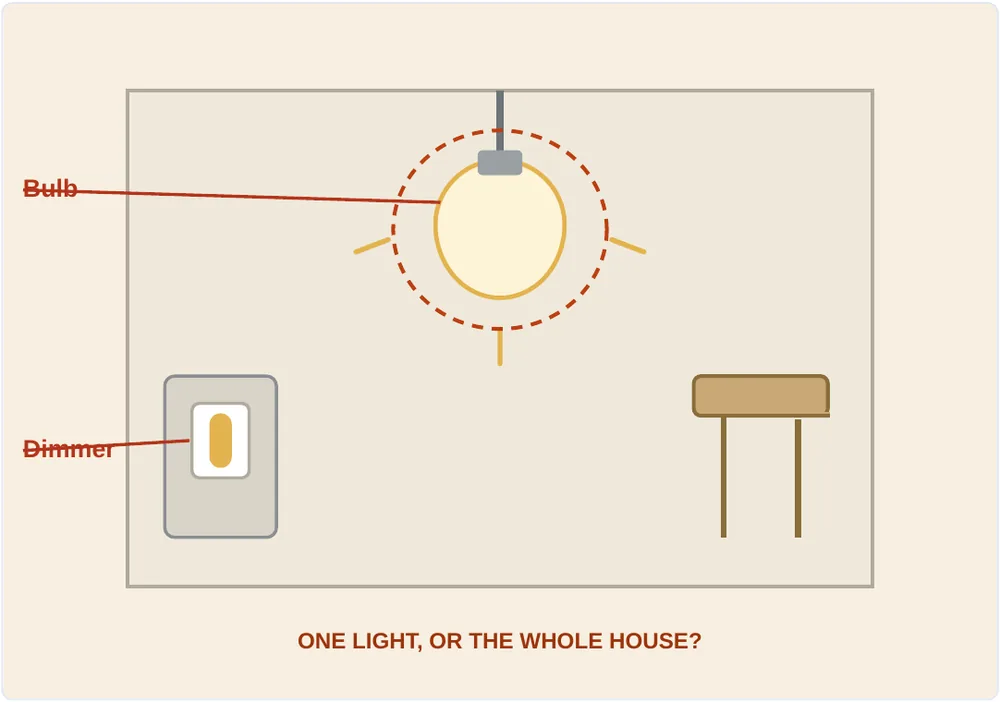
One light, or the whole house? Step 2 Tighten the bulb
Turn the light off and let the bulb cool. Then turn the bulb clockwise until it is snug — not forced, just tight. Loose bulbs are the most common cause of flicker, and they loosen over time from heat and vibration. Turn the light back on. If the flicker is gone, that was it.
To double-check the power is off, the tester I recommend: Klein Tools NCVT3P Dual-Range Non-Contact Voltage Tester.
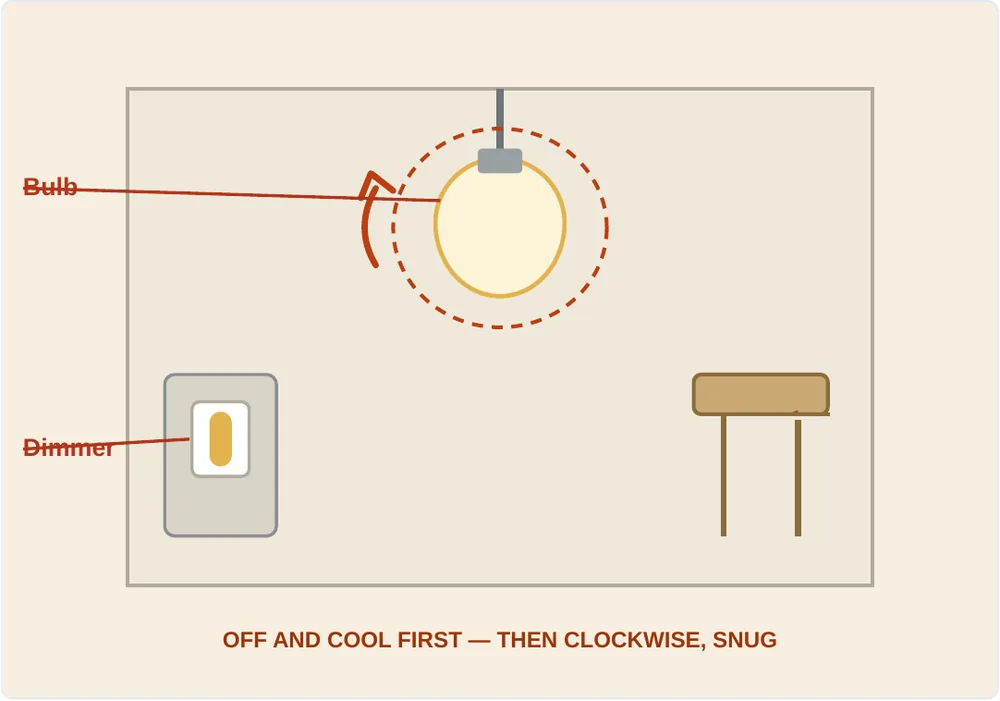
Off and cool first — then clockwise, snug. Step 3 Try a different bulb
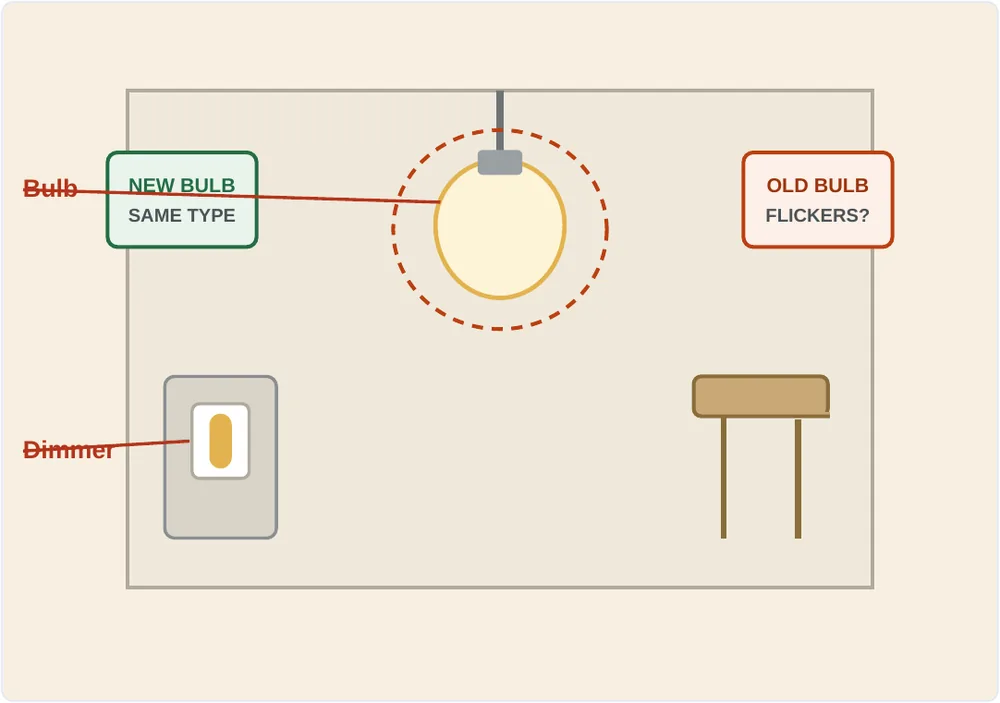
If it still flickers, turn the light off, let the bulb cool, and swap in a new bulb of the same type and wattage. A bulb on its way out will often flicker before it dies. If the new bulb flickers too, the problem is not the bulb.
Step 4 Check the dimmer
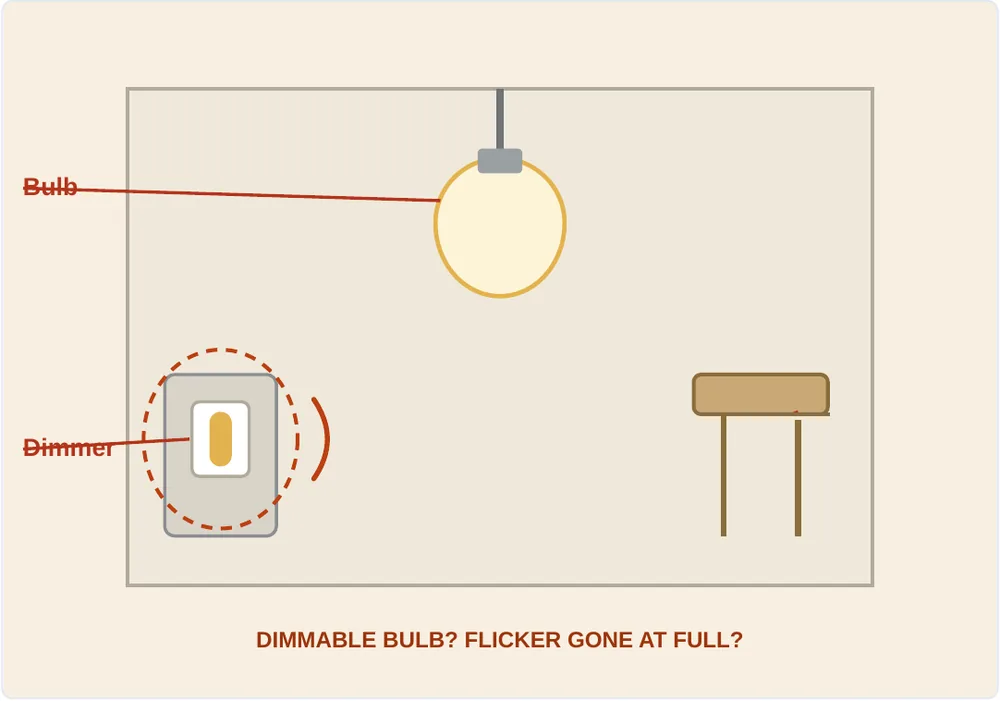
If the light is on a dimmer, the bulb and the dimmer have to match. Old dimmers were made for incandescent bulbs, and many LED bulbs flicker on them. Make sure the bulb says dimmable, and try turning the dimmer up to full — if the flicker stops at full brightness but comes back when you dim it, the dimmer and the bulb do not get along. Do not take the dimmer apart or rewire it. If a dimmable bulb at full brightness still flickers, or the dimmer buzzes or feels hot, turn the light off and call a licensed electrician.
Dimmable bulb? Flicker gone at full? Step 5 Watch the pattern, then decide
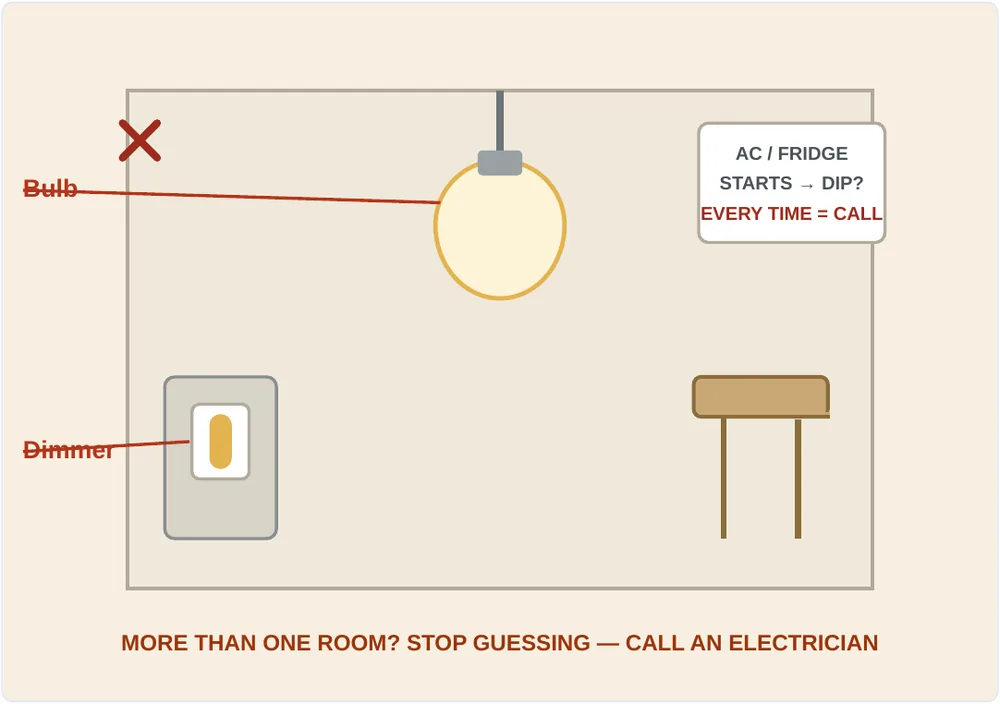
Lights that dim for a second when the air conditioner, refrigerator, or washing machine starts are common in older homes. But if it happens every time, gets worse, or the lights dim a lot, that is worth an electrician looking at. If the flicker is in more than one room, or is still there after a tight bulb, a new bulb, and a matching dimmer, stop guessing and call a licensed electrician.
More than one room? Stop guessing — call an electrician.
What not to do
- Don't work on a light while it is on, and don't touch a hot bulb.
- Don't open the electrical panel, and don't take apart a switch, outlet, or dimmer.
- Don't ignore a burning smell, buzzing, a hot outlet, or scorch marks.
- Don't put in a higher-wattage bulb than the fixture is rated for.
When to call a licensed electrician
- More than one light flickers, or lights in different rooms flicker together.
- The flicker comes with a burning smell, buzzing, a hot switch or outlet, or scorch marks.
- The breaker trips, or the lights dim a lot every time a big appliance starts.
- The flicker is still there after a tight bulb, a new bulb, and a matching dimmer.
Why this works
A bulb flickers when the connection is loose, the bulb is dying, or the dimmer is sending it power it was not made for. Those three checks rule out the easy causes. What is left is usually a loose connection in the wiring — and that is exactly the kind of thing a licensed electrician should find, not a homeowner.
Free printable California Earthquake Checklist
Get the one-page checklist — what to do this week, this month, and when the shaking starts and stops. Stick it on the fridge.
No spam. Unsubscribe anytime. See the privacy policy.
Disclosure and disclaimer — please read
Disclosure: This guide recommends one product, with an Amazon affiliate link. If you buy through it, I may earn a commission at no extra cost to you. Read the affiliate disclosure.
Disclaimer: This guide is general information only, not professional electrical advice. I am not a licensed electrician. Every home is different, so use your own judgment, turn the power off before you touch a bulb, never work on live wiring, and stop if anything looks wrong. If you are not comfortable doing any step, call a licensed electrician. By following these steps you do so at your own risk — I am not responsible for fire, injury, or any other loss that may result.