Cracked driveway — fix it yourself or get a quote?
This guide recommends one product, with an Amazon affiliate link. If you buy through it, I may earn a commission at no extra cost to you. Read the affiliate disclosure.
The short answer
Most small cracks are a DIY fix — clean them out, fill them, and seal them. Wide cracks, sinking slabs, or water pooling are not. Those are signs the ground underneath has moved, and filling them will not fix it. This guide helps you tell the two apart before you spend money on either one.
What you need
- A stiff wire brush and a broom.
- Concrete crack filler — the squeeze-tube kind for small cracks.
- A caulking gun, if the filler comes in a tube.
- A putty knife or an old screwdriver, to scrape out loose bits.
- Gloves and old clothes.
Step by step
Step 1 Look at the crack and measure it
A small crack — less than 1/4 inch wide — is usually just the concrete shrinking as it cured, and it is a DIY fill. A crack wider than 1/4 inch, a crack where one side is higher than the other, a slab that has sunk or tilted, or water pooling in the crack after rain is a different job. Note the wide ones, and get a contractor quote for those instead of filling them.
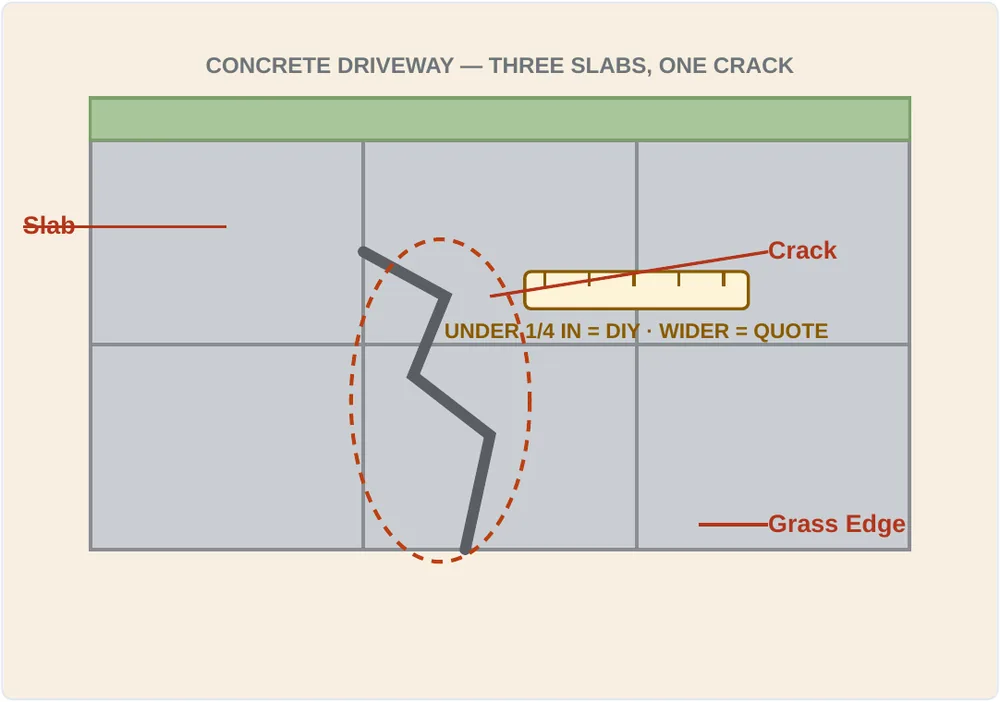
Under 1/4 inch = DIY. Wider = get a quote. Step 2 Clean the crack out
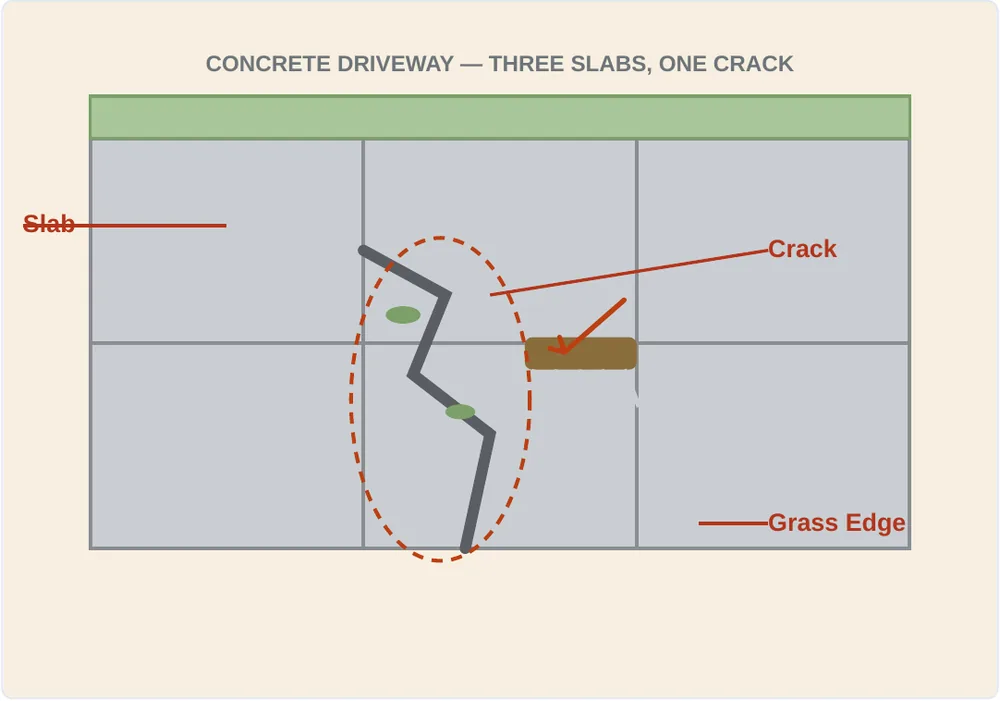
Pick a dry day. Scrape out dirt, weeds, and loose concrete with the screwdriver or putty knife, then scrub it with the wire brush. Sweep out everything loose. The filler will not stick to dirt, so this step matters — a clean crack holds, a dirty one pops back out.
Step 3 Fill the crack
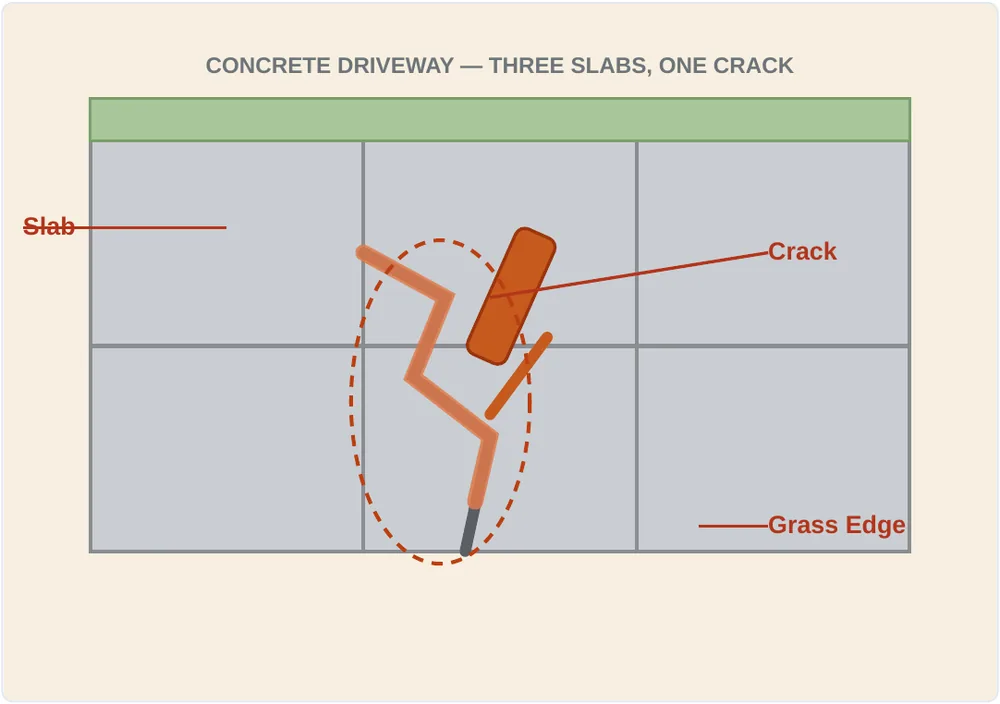
Cut the tip of the filler tube to match the width of the crack, and fill it from the bottom up, in one slow pass. Overfill it just a little, then smooth it with the putty knife so it is level with the driveway. Work in the shade if you can — filler dries too fast in direct sun and can crack again.
The crack filler I recommend: Sikaflex Crack Flex Sealant, gray, 10.1 oz.
Step 4 Let it cure
Leave the filled crack alone. Do not drive on it until the filler has cured — check the label, usually 24 hours, and longer in cold or damp weather. A filler that gets driven on before it cures will not hold.
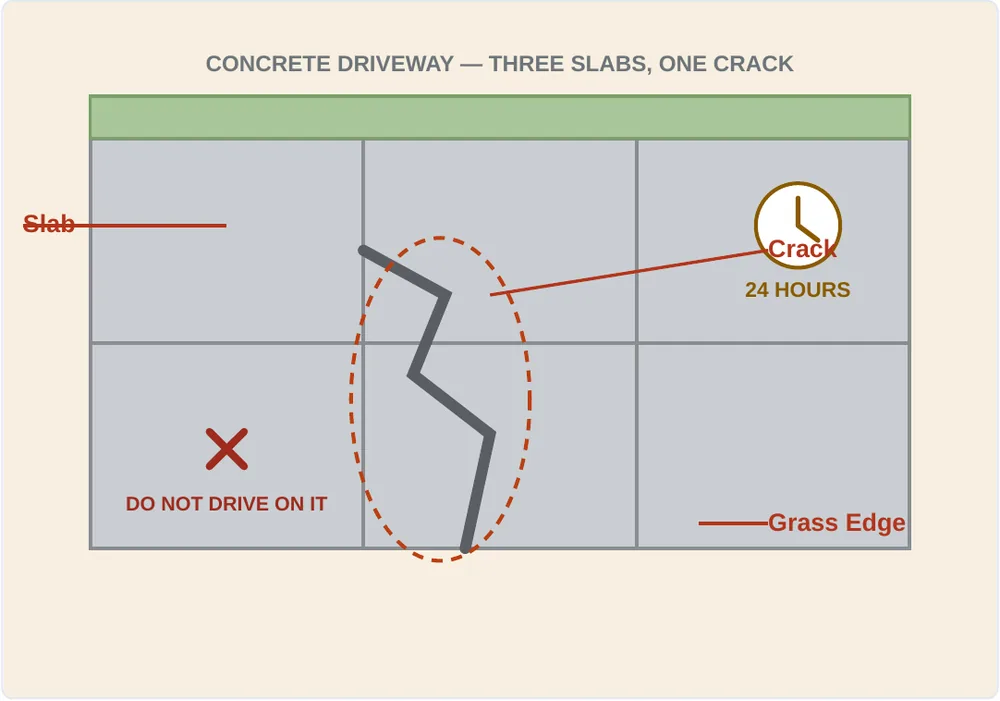
Don't drive on it until it cures. Step 5 Check it, and seal if it needs it
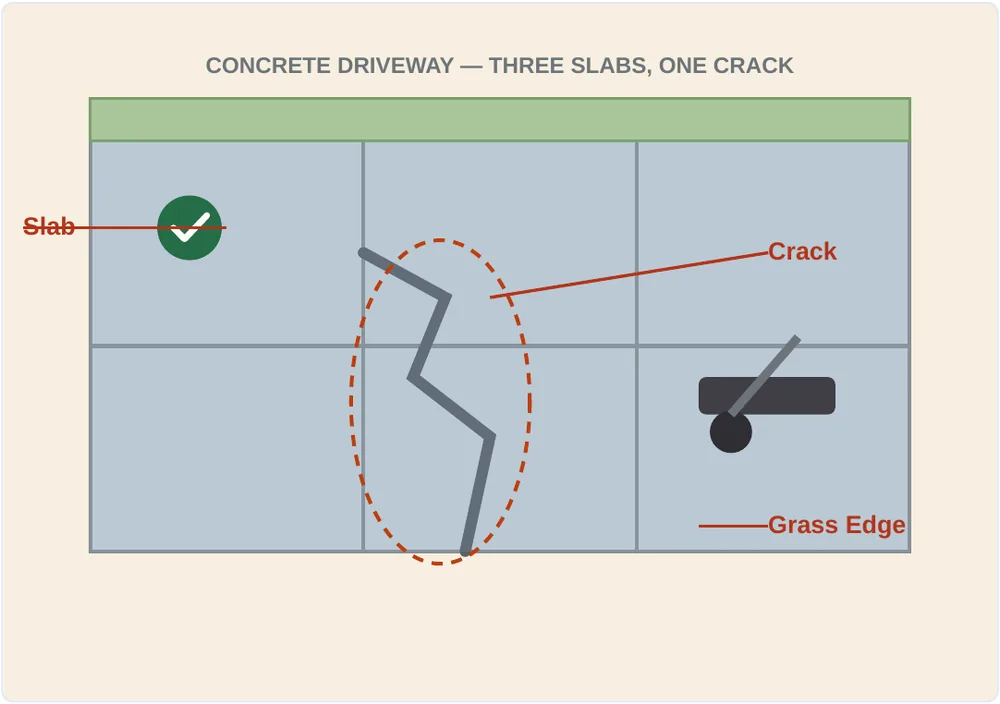
After it cures, look at the fill. It should be level and stuck down. If it shrank and left a dip, fill it once more the same way. If the driveway has a lot of small cracks, a concrete sealer over the whole driveway will keep water out and slow down new ones — do it on a dry day, and follow the label.
What not to do
- Don't fill a crack full of dirt, weeds, or loose concrete — clean it first or the filler will not stick.
- Don't fill a wide crack, a sinking slab, or a heaved slab and expect it to stay fixed — that is a ground problem, not a surface problem.
- Don't drive on fresh filler before it cures.
- Don't use the wrong filler — a filler made for asphalt will not work on concrete, and the other way around.
- Don't ignore water pooling on the driveway — water getting under a slab is what makes it sink.
When to get a contractor quote
- A crack wider than 1/4 inch, or one that keeps getting wider.
- One side of a crack is higher than the other, or a slab has sunk or tilted.
- Water pools in the crack or on the driveway after rain.
- Cracks are spreading across the whole driveway, or new ones keep appearing.
- Tree roots are lifting the slab, or the driveway is draining toward the house.
Why this works
A small crack is just an opening for water to get in. Water gets in, freezes, expands, and makes the crack bigger — that is how a small crack becomes a wide one. Filling it seals the opening, so water stays out. A wide crack or a sinking slab is different: the ground underneath has already moved, so filling the surface will not stop it moving again. That is why the first step is measuring the crack — it tells you whether a $20 tube of filler is the fix, or a contractor quote is.
Free printable California Earthquake Checklist
Get the one-page checklist — what to do this week, this month, and when the shaking starts and stops. Stick it on the fridge.
No spam. Unsubscribe anytime. See the privacy policy.
Disclosure and disclaimer — please read
Disclosure: This guide recommends one product, with an Amazon affiliate link. If you buy through it, I may earn a commission at no extra cost to you. Read the affiliate disclosure.
Disclaimer: This guide is general information only, not professional advice. I am not a licensed contractor. Every driveway and home is different, so use your own judgment, follow the product label, and stop if anything looks wrong. If you are not comfortable doing any step, or the crack is wide, sinking, or heaving, get a quote from a licensed contractor. By following these steps you do so at your own risk — I am not responsible for injury, damage, or any other loss that may result.