GFCI outlet keeps tripping in the bathroom or kitchen
This guide recommends one product, with an Amazon affiliate link. If you buy through it, I may earn a commission at no extra cost to you. Read the affiliate disclosure.
The short answer
A GFCI trips to protect you from a shock. If even a tiny bit of power leaks — through water, a faulty appliance, or a worn outlet — it shuts off in a split second. Most trips are a wet outlet, one bad appliance, or an old GFCI. About 10–15 minutes to find the cause. Finding the cause is DIY; replacing the GFCI itself is a job for a licensed electrician.
What you need
- A towel.
- A plug-in GFCI outlet tester (optional) — a second way to check that the GFCI still trips.
- A flashlight, to look for leaks under the sink.
Step by step
Step 1 Reset it, and dry the area
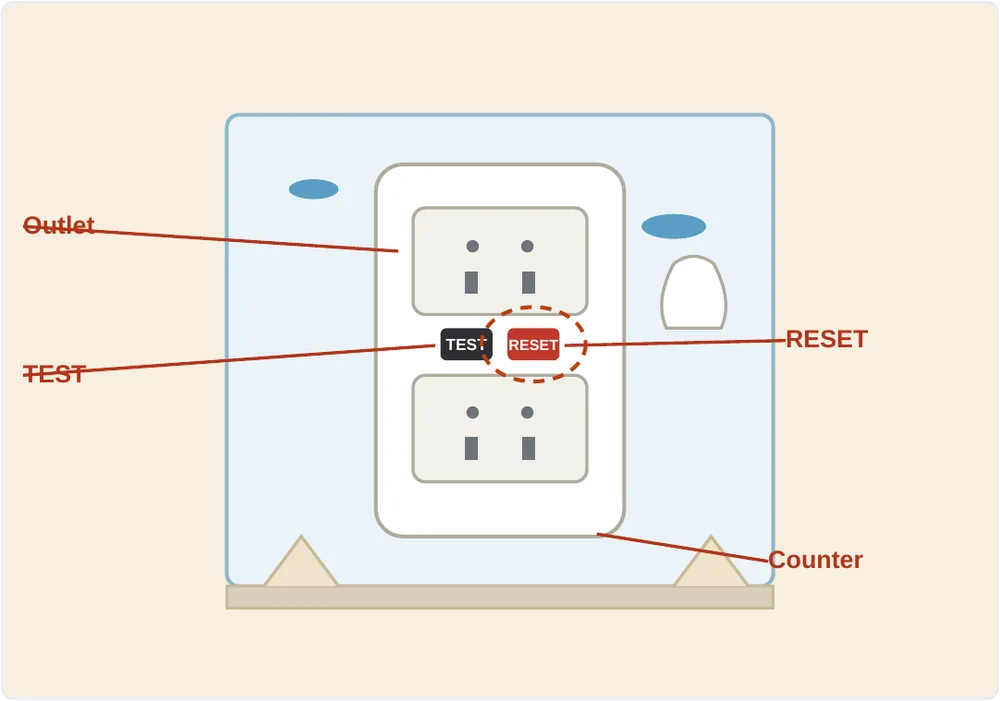
Press RESET until it clicks in. If it trips again, dry the outlet and the area around it — water in the bathroom or splashes in the kitchen are the most common cause. Wait until it is fully dry, then press RESET again.
Press RESET until it clicks. Step 2 Unplug everything, then plug things back one by one
Unplug everything from that outlet and any others on the same circuit. Press RESET. If it holds, plug things back in one at a time. When it trips, the last thing you plugged in is the problem. Stop using that appliance.
Step 3 Check for moisture
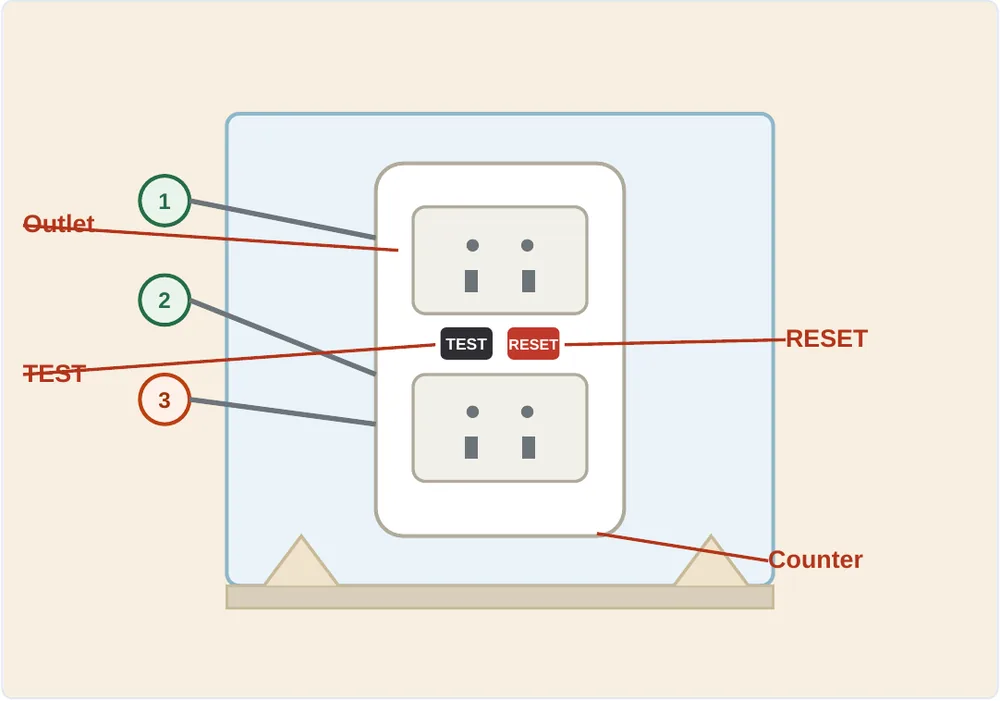
If it trips with nothing plugged in, look for water: under the sink, around the faucet, behind the toilet. A slow leak dripping onto the outlet will trip it over and over. Fix the leak first, then press RESET. If the outlet itself is wet inside, do not keep resetting it — turn off the breaker and call a licensed electrician.
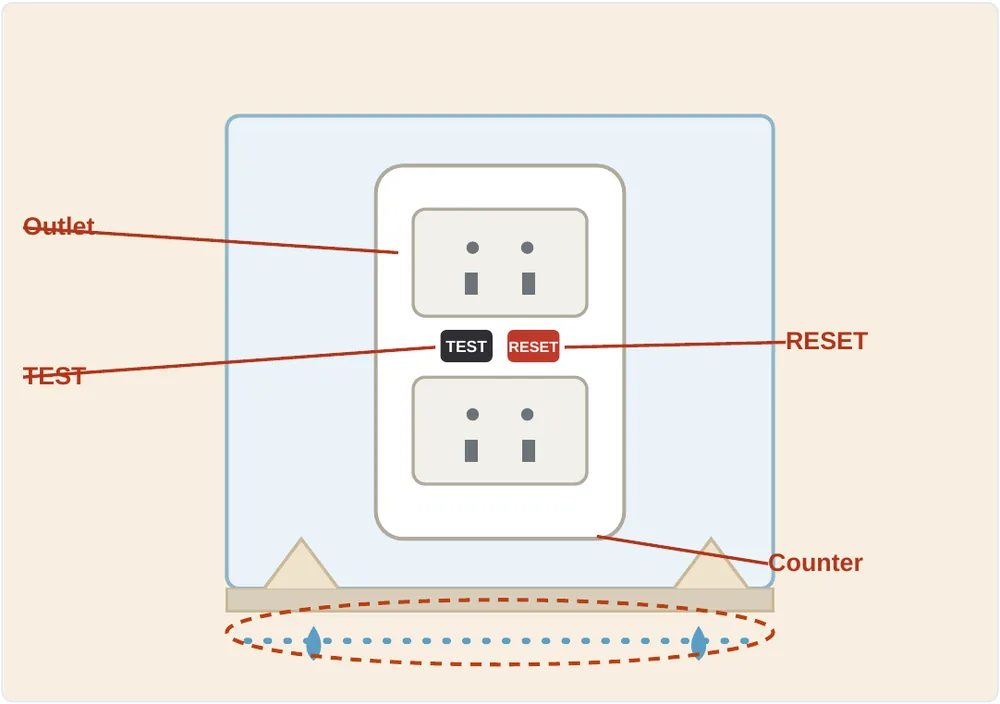
Look for water around and below the outlet. Step 4 If it trips with nothing plugged in and everything dry
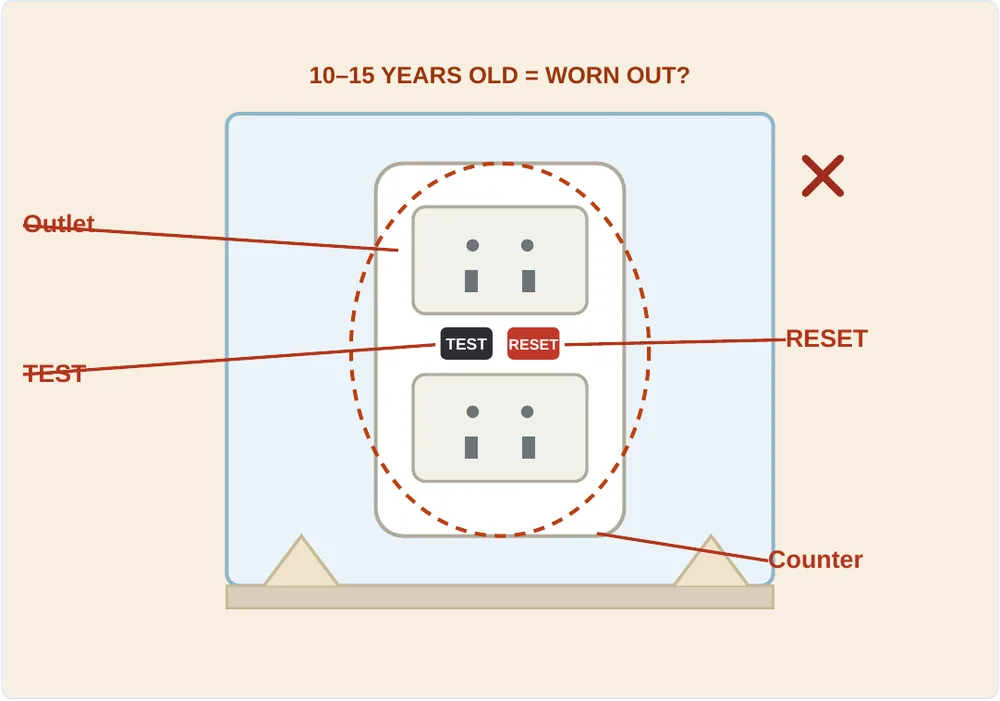
The GFCI itself may be worn out. They last 10 to 15 years, less in a damp bathroom or kitchen. If it trips for no clear reason, or the TEST button does not trip it, it is not protecting you anymore and needs replacing. Stop using that outlet until it is replaced.
A plug-in tester gives you a second check. The one I recommend: Klein Tools RT210 GFCI and Standard AC Outlet Tester.
Step 5 Replacing it? Call a licensed electrician
Replacing a GFCI means opening the box and reconnecting the wiring. If LINE and LOAD are mixed up, the outlet can look like it works while it no longer protects you or the outlets downstream from it. That is not a beginner job, so this guide stops here.
Turn off the breaker for that outlet, leave the outlet unused, and call a licensed electrician. Tell them what you already checked (moisture, appliances, and that TEST/RESET didn't fix it) — it saves them time.
What not to do
- Never open the outlet or work on the wiring yourself — GFCI replacement is a job for a licensed electrician.
- Don't keep pressing RESET if it trips every time — find the cause first.
- Don't swap a GFCI for a regular outlet.
- Don't keep using an outlet whose TEST button no longer trips it.
When to call a licensed electrician
- It trips with nothing plugged in and everything dry, or the TEST button doesn't trip it — it needs replacing.
- You see burn marks, smell burning, or the outlet is hot.
- There is water inside the outlet box, or a leak you cannot find.
Why this works
A GFCI trips when current leaks where it should not go — usually through water or a faulty appliance. Finding the leak or the bad appliance removes the cause, and that part takes a few minutes with no tools. If the GFCI itself is worn out, a licensed electrician can replace it and check the wiring while the box is open.
Free printable California Earthquake Checklist
Get the one-page checklist — what to do this week, this month, and when the shaking starts and stops. Stick it on the fridge.
No spam. Unsubscribe anytime. See the privacy policy.
Disclosure and disclaimer — please read
Disclosure: This guide recommends one product, with an Amazon affiliate link. If you buy through it, I may earn a commission at no extra cost to you. Read the affiliate disclosure.
Disclaimer: This guide is general information only, not professional electrical advice. I am not a licensed electrician. Every home and circuit is different, so use your own judgment, turn off the breaker if you are unsure, and stop if anything looks wrong. Never work on live wires, and do not open the outlet — replacing a GFCI is a job for a licensed electrician. By following these steps you do so at your own risk — I am not responsible for injury, fire, or any other loss that may result.