How to fix a toilet that keeps running
This guide recommends one product, with an Amazon affiliate link. If you buy through it, I may earn a commission at no extra cost to you. Read the affiliate disclosure.
The short answer
A toilet that keeps running is usually a worn-out flapper. It wastes about 200 gallons of water a day. The fix is usually a $5–25 part and takes about 15 minutes.
What you need
- A new flapper — match the size in your toilet, usually 2 inch or 3 inch. Take the old one with you, or check the size before you buy.
- Food coloring, or dye tablets made for toilets.
- An old towel.
- Rubber gloves if you want them.
Step by step
Step 1 Find out if it's the flapper
Lift the tank lid. Put a few drops of food coloring in the tank water. Don't flush. Wait 15–20 minutes. If color shows up in the bowl, the flapper is leaking — water is slipping from the tank into the bowl, and the toilet keeps refilling to replace it. That's your problem.
Odd-looking toilet? Some toilets use a tall canister (tower) flush valve instead of a round flapper. The dye test still works, but the replacement part is a canister seal, not a flapper — check your toilet's brand and model before you buy.
Step 2 Check the water level
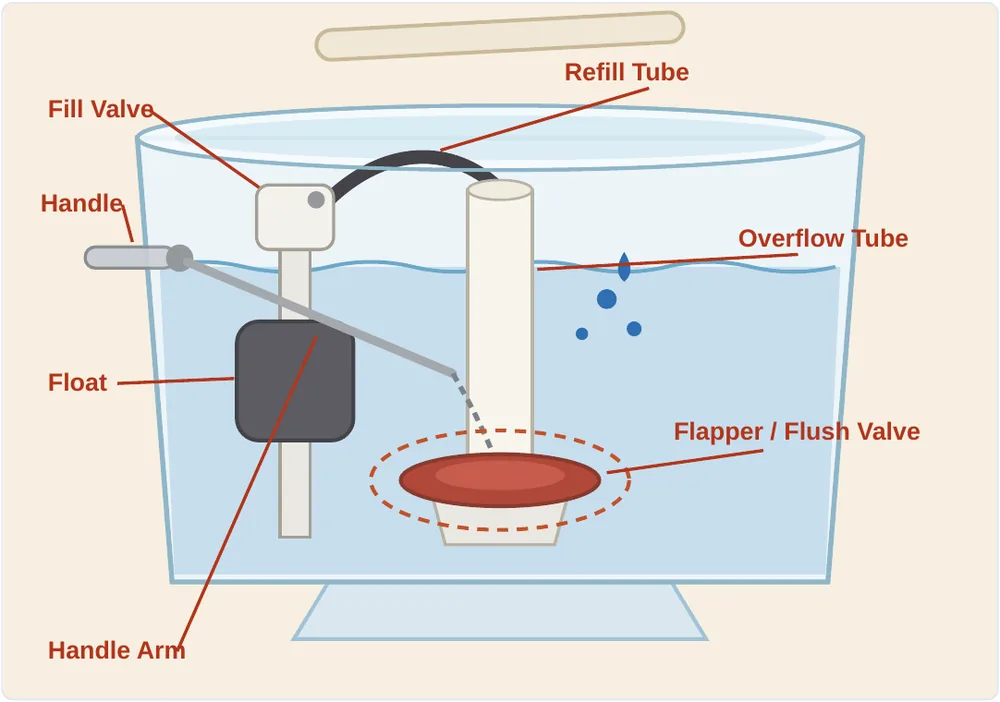
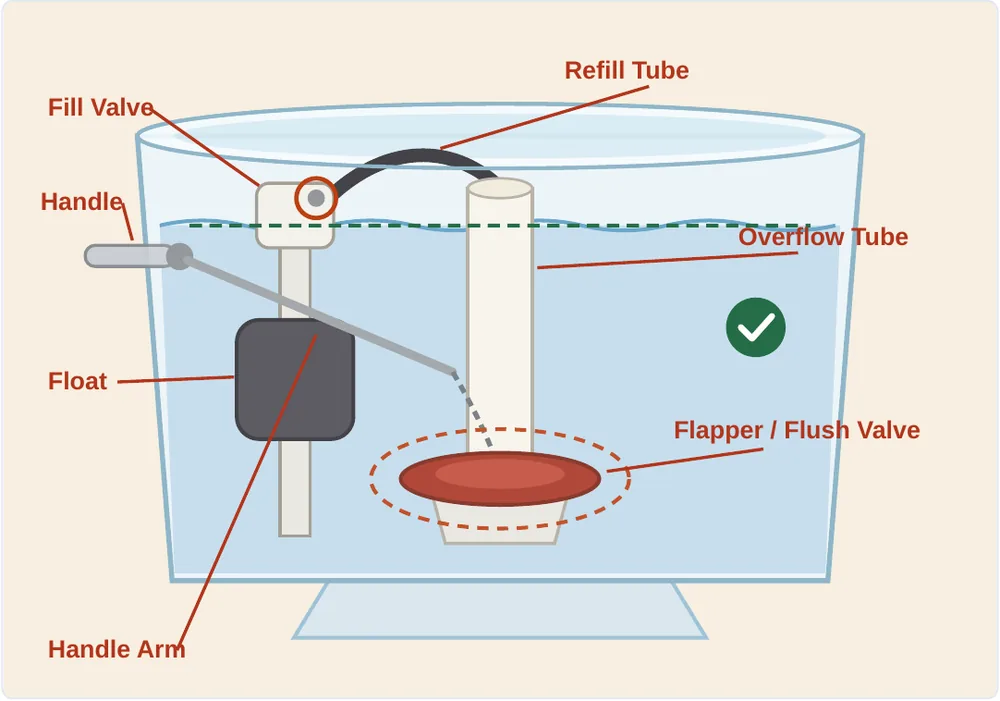
With the lid off, look at the water level in the tank. It should sit about 1 inch below the top of the overflow tube — the open pipe in the middle of the tank. If the water is going into the overflow tube, the level is too high. Lower it by adjusting the float — turn the screw on top of the fill valve, or slide the float clip down, depending on the type you have. Flush and let it fill again, then check the level.
Step 3 Shut off the water before you reach into the tank
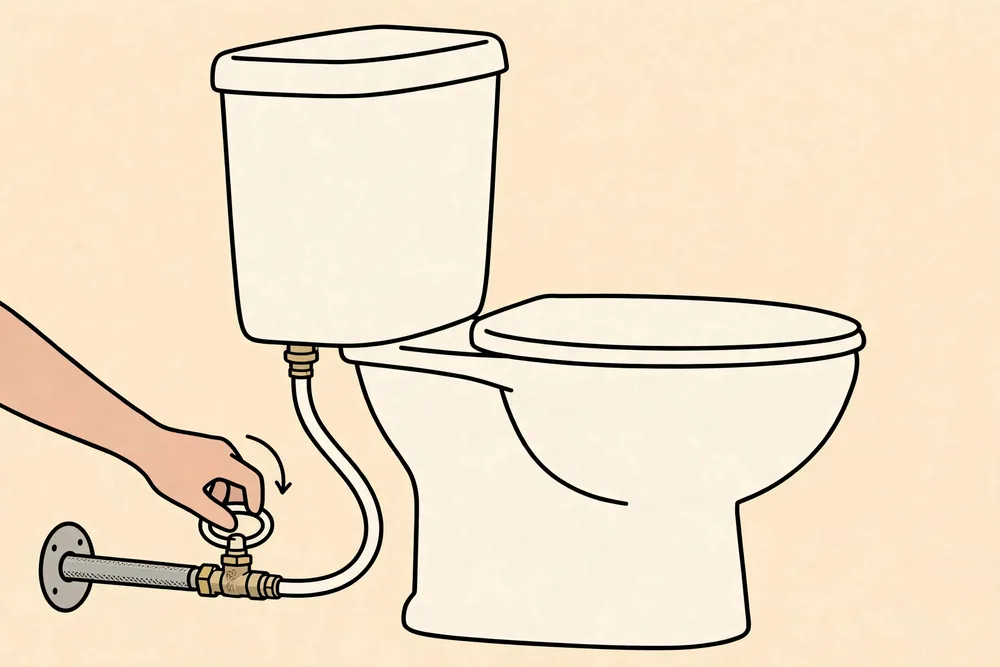
Before you touch the flapper, turn off the water valve behind the toilet — turn it clockwise until it stops — then flush once to empty the tank. That way the tank won't refill while you're working in it, and you can reach the flapper without water running.
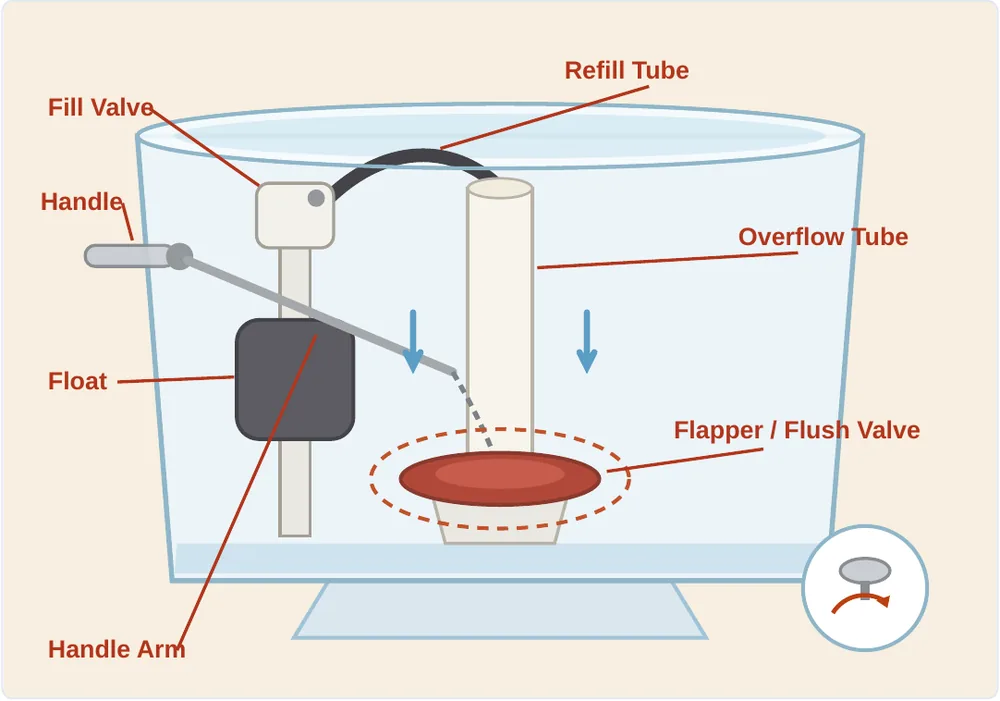
Turn the valve clockwise until it stops, then flush to empty the tank. Step 4 Look at the flapper and the chain
Look at the flapper — the rubber disc at the bottom of the tank. If it's warped, cracked, or feels soft and sticky, it's worn out and won't seal. Check the chain too. It should have about half an inch of slack. If it's too tight, it holds the flapper open a little. If it's too long, it can get caught under the flapper. Adjust the hook on the chain until there's a little slack.
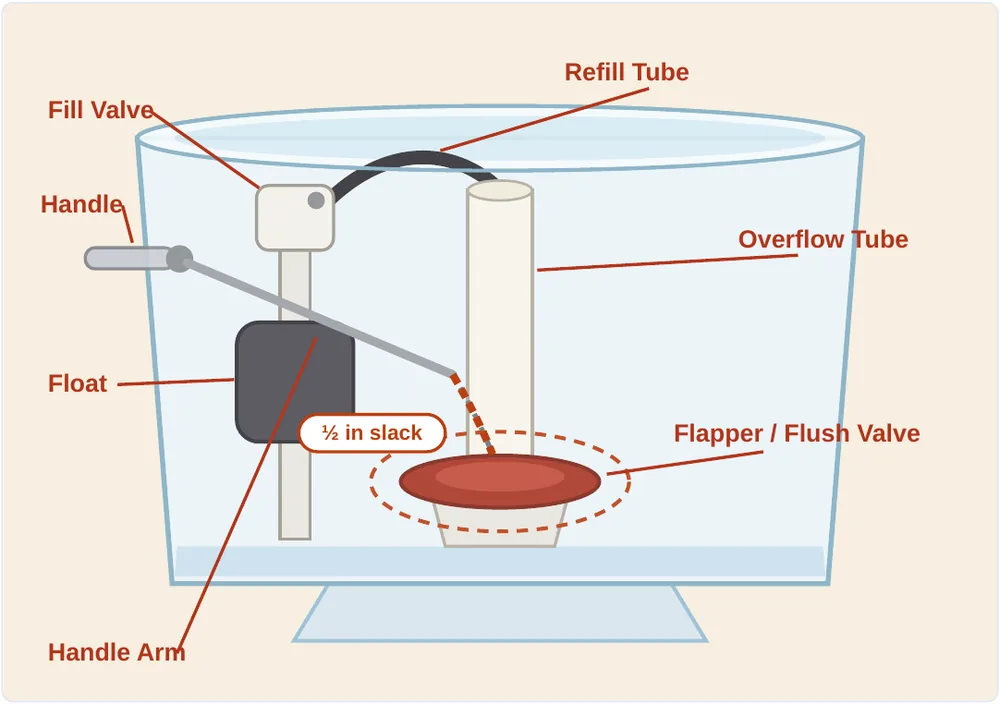
About ½ inch of slack in the chain. Step 5 Swap the flapper
With the water already off and the tank empty, unhook the old flapper from the two pegs on the overflow tube and unhook the chain. Hook the new flapper on the same way, and hook the chain to the flush lever with about half an inch of slack. Turn the water back on and let the tank fill.
If your old flapper is 2 inch, this is the replacement I recommend: Korky 100BP 2-Inch Universal Toilet Flapper.
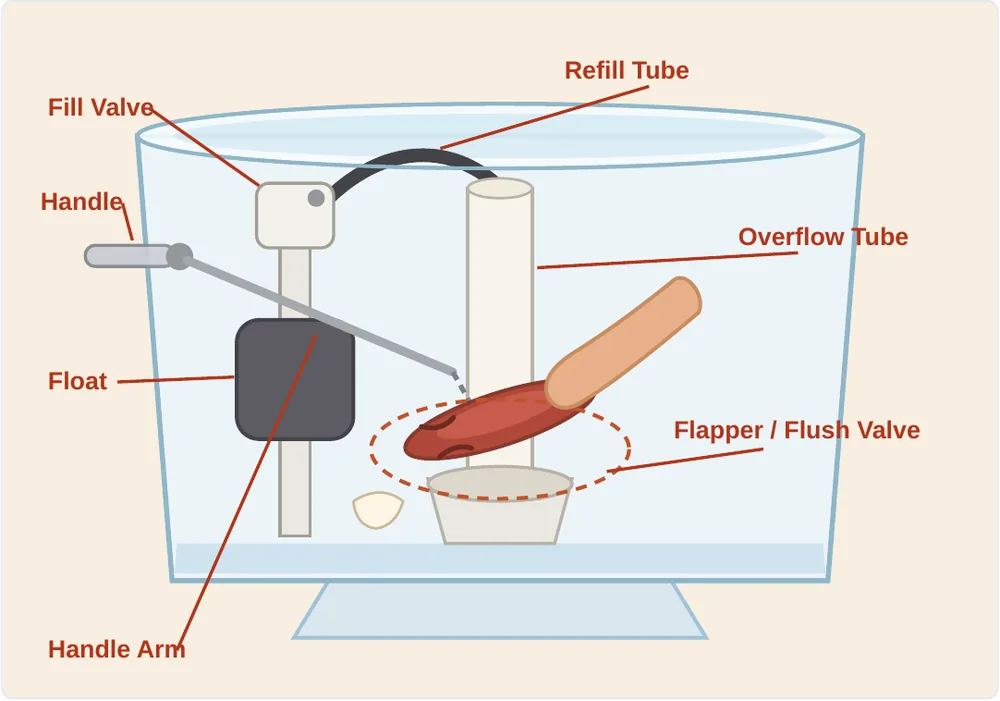
Unhook the old flapper. 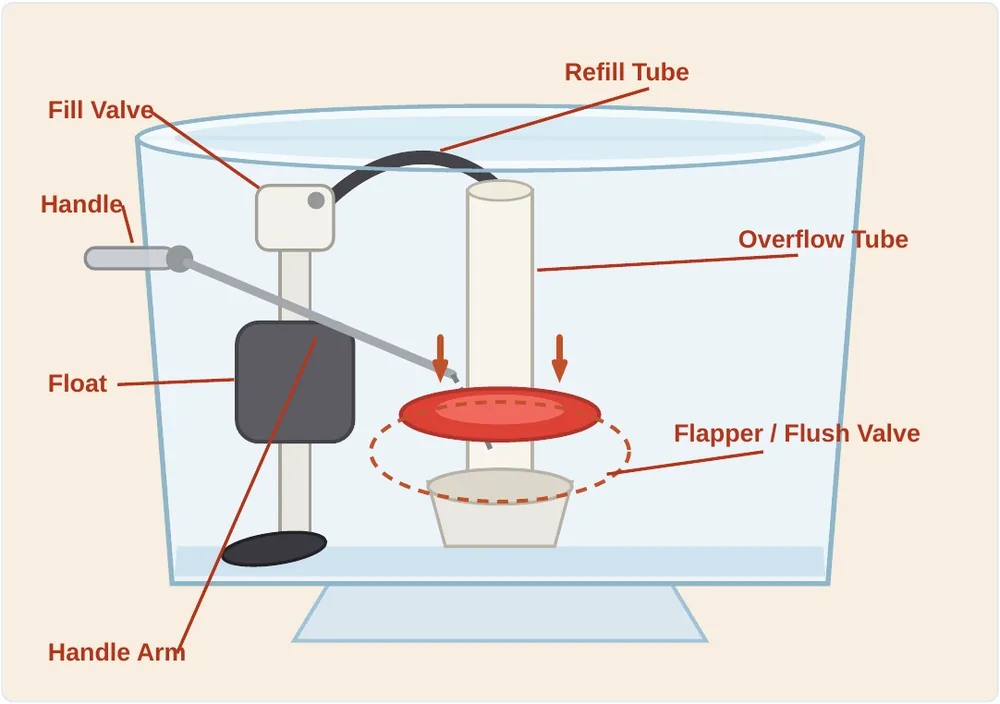
Hook the new one on the same way. Step 6 Test it
Flush once and let it fill. It should fill, then stop — no running sound. Wait 10 minutes and listen. If it's quiet, do the dye test from Step 1 again. No color in the bowl means the seal is holding.
What not to do
- Don't just keep jiggling the handle — that doesn't fix a worn flapper.
- Don't buy a flapper without checking the size — a 2 inch flapper won't seal a 3 inch valve.
- Don't leave the chain too tight — it will hold the flapper open and the toilet will keep running.
- Don't ignore it — 200 gallons a day adds up fast on the water bill.
When to call a plumber
- The toilet still runs after a new flapper and the water level is right.
- The fill valve is cracked, hissing, or won't shut off.
- The overflow tube is cracked.
- There's water on the floor around the base of the toilet.
Why this works
The flapper is the seal between the tank and the bowl. When it's worn, water leaks into the bowl all day, and the fill valve keeps running to top the tank back up. A new flapper seals again, the tank stays full, and the fill valve shuts off. That's why this is usually a $5–25 fix instead of a plumber call.
Free printable California Earthquake Checklist
Get the one-page checklist — what to do this week, this month, and when the shaking starts and stops. Stick it on the fridge.
No spam. Unsubscribe anytime. See the privacy policy.
Disclosure and disclaimer — please read
Disclosure: This guide recommends one product, with an Amazon affiliate link. If you buy through it, I may earn a commission at no extra cost to you. Read the affiliate disclosure.
Disclaimer: This guide is general information only, not professional plumbing advice. I am not a licensed plumber. Every toilet and home is different, so use your own judgment, turn off the water first if you are unsure, and stop if anything looks wrong. If you are not comfortable doing any step, call a licensed plumber. By following these steps you do so at your own risk — I am not responsible for water damage, injury, or any other loss that may result.