How to unclog a kitchen sink
This guide recommends one product, with an Amazon affiliate link. If you buy through it, I may earn a commission at no extra cost to you. Read the affiliate disclosure.
The short answer
Most kitchen sink clogs are grease and food stuck in the drain or the trap under the sink. About 15–30 minutes, and no chemical drain cleaner needed.
How I do it: I skip the plunger and the snake and go straight to the trap — that's where the grease clog usually is, and cleaning it out fixes it for sure. That is messier and more work under the sink, though, so it might be too much for the average homeowner. The steps below keep the easier first tries — plunger, then snake — first, and the trap as Step 4. If you want the direct fix, skip to Step 4.
First, check which sink you have — the steps are different with a garbage disposal than without one. This guide covers both, and says which parts apply to which.
What you need
- A cup plunger — the flat sink plunger, not a flange toilet plunger.
- A hand drain snake — the hand-crank kind, about 15–25 feet.
- A bucket and old towels.
- Rubber gloves.
- An adjustable wrench or channel-lock pliers, for the trap nuts if you get that far.
Step by step
Step 1 Which sink, and what's clogged?
Don't keep running the water — it will just back up. Bail out most of the standing water into the bucket so you can see the drain. If you have a double sink and only one side is slow, the clog is usually on that side. If both sides back up, the clog is further down, past where the two sides join.
With a garbage disposal: turn the disposal switch OFF and leave it off while you work. If it's plugged in under the sink, unplug it. If it's hardwired (no plug), turn off its breaker. Never put your hand inside the disposal. If the disposal hums or won't turn, it may be jammed rather than clogged — see Why is my garbage disposal not working? first.
Without a garbage disposal: there is no disposal to check — go on to Step 2.
Already poured in chemical drain cleaner? Stop here. Don't plunge, don't snake, and don't open the trap — the cleaner can splash or spill onto your skin and eyes. Call a plumber and tell them what product is in the drain.
Step 2 Plunge it — the easy first try
If you want the direct fix, skip this step and the next one and go straight to Step 4, the trap — that's what I do. The plunger is here for homeowners who want to try the easy, clean way first.
Put the cup plunger over the drain so it seals flat. If it's a double sink, plug the other drain with a stopper or wet rag so the pressure doesn't just escape out the other side. Make sure there's enough water in the sink to cover the plunger cup. Push down slowly to seal, then firm push and pull 10–15 times. Lift the plunger and see if the water drains.
With a garbage disposal: don't plunge through the disposal. Keep the disposal off, plug the disposal-side drain with its stopper or a wet rag, and plunge the other side of the double sink. If it's a single sink with a disposal, skip the plunger and go to Step 4.
Without a garbage disposal: just plunge the slow drain — single sink, or the slow side of a double sink.
Step 3 Snake it — the second easy try
If plunging didn't clear it, and you didn't go straight to the trap, feed the drain snake in slowly. Push the cable in a little, crank the handle, push a little more. When you feel resistance, that's the clog — crank and push gently through it, then pull the cable back slowly and clean it off. Don't force it. If it won't go, pull it back and try again rather than shoving hard and kinking the cable or cracking a pipe. Run some water and see if it drains now.
With a garbage disposal: do NOT feed the snake through the disposal — it can damage the disposal. Feed it through the other drain, or take the trap off first (Step 4) and feed it from there.
Without a garbage disposal: feed the snake straight down the slow drain.
The hand snake I recommend: Cobra 10250 Drain Auger, 1/4 in x 25 ft.
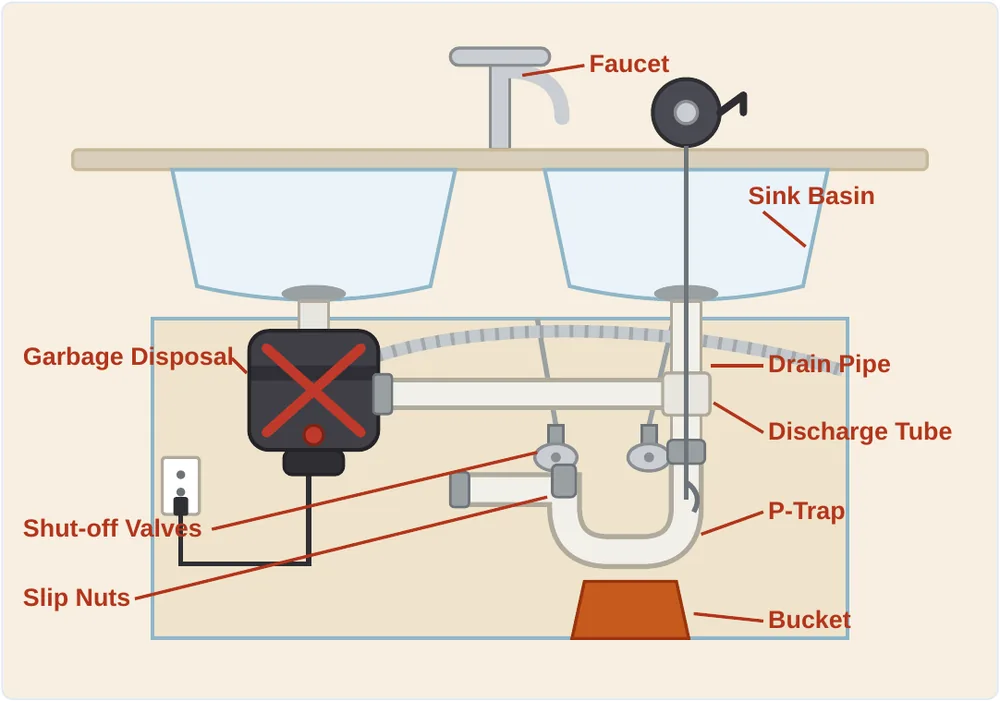
Snake the side without the disposal — never through the disposal. Step 4 Clean out the trap — the direct fix
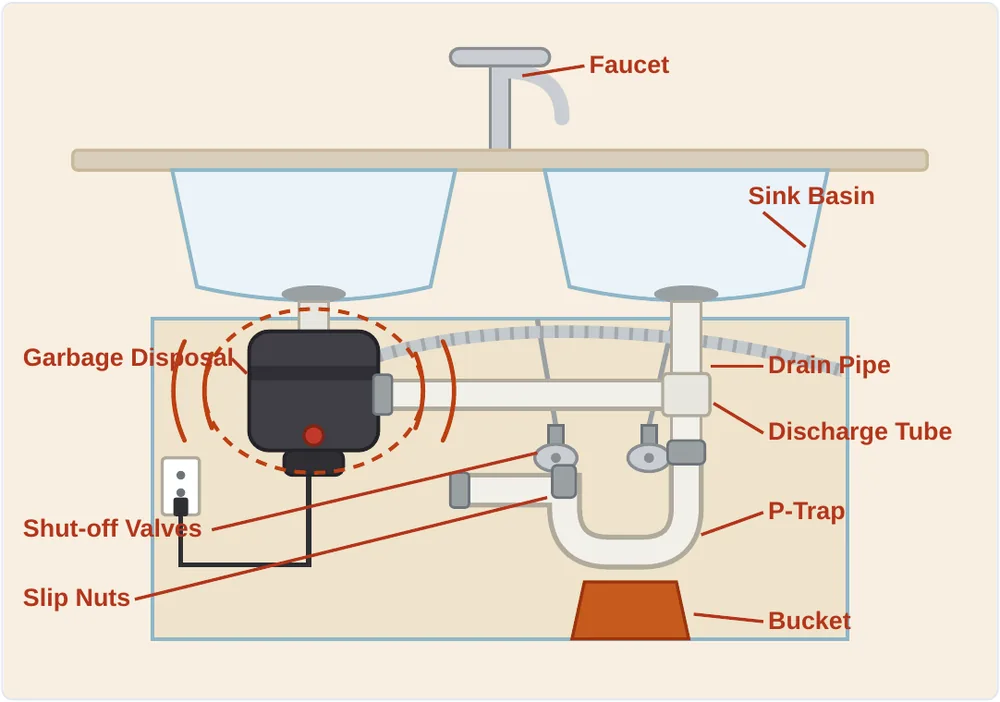
This is the step I go to first. If it still won't drain after plunging and snaking, or if you skipped those steps, the clog is probably in the P-trap — the U-shaped pipe under the sink. Put the bucket under it. Unscrew the slip nuts on both ends of the trap by hand, or with the wrench if they're stuck. Let the water in the trap fall into the bucket, pull the trap off, and empty it out. Check inside for grease and food, clean it, then put it back the same way and tighten the nuts hand-tight plus a small turn with the wrench. Don't overtighten — the plastic nuts crack.
With a garbage disposal: the trap is under the other side — the side without the disposal. The disposal's discharge tube runs across and connects into that drain pipe above the trap — you may need to disconnect that tube first, and put the bucket under both the trap and the disposal outlet.
Without a garbage disposal: it's a standard P-trap — just the two slip nuts, as above.
Don't open the trap if chemical drain cleaner has been poured into the sink — call a plumber instead.
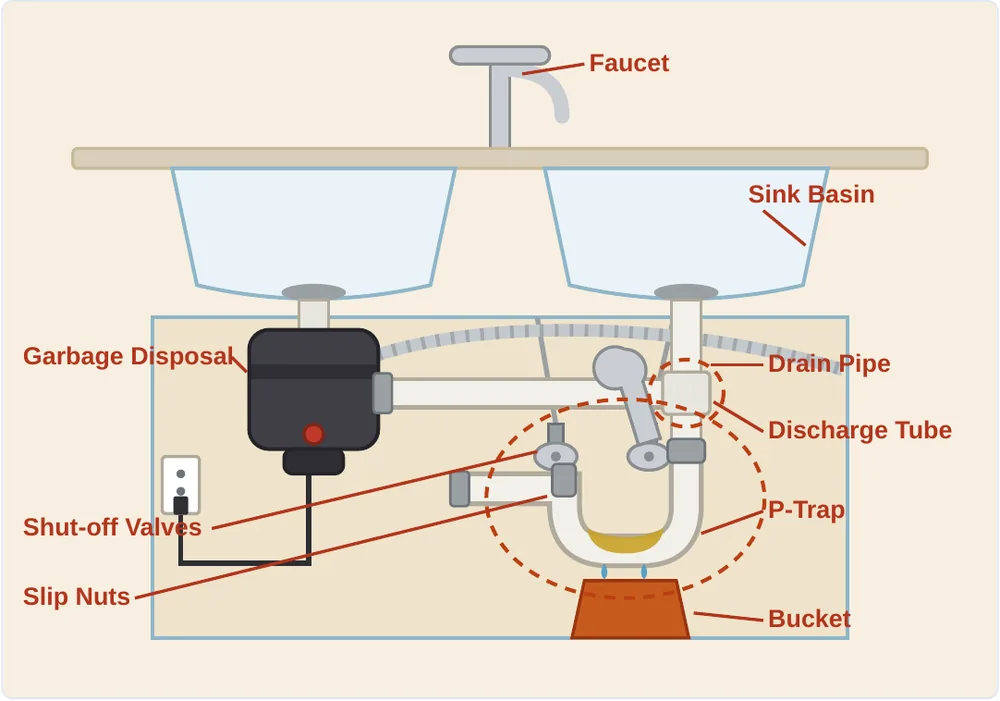
The trap comes off over the bucket. Step 5 Test it
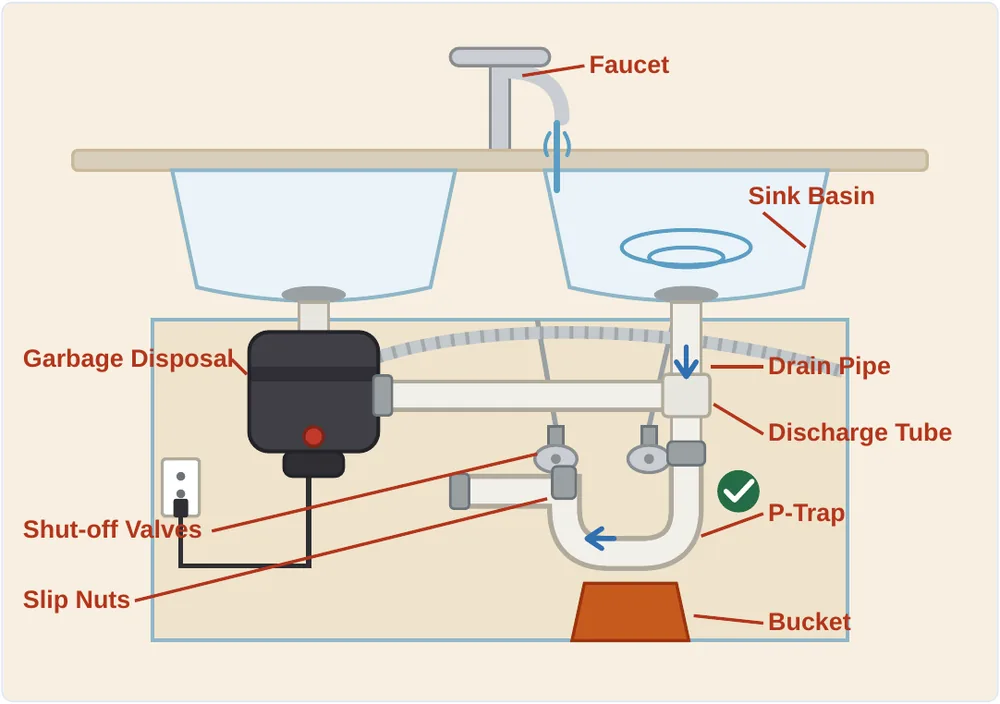
Run hot water for a minute and watch it drain. Then look under the sink while the water runs — no drips at the trap nuts. If it drains fast and nothing leaks, you're done.
With a garbage disposal: plug it back in or turn its breaker back on. Run cold water first, then run the disposal briefly with the water still running, and check for leaks under the sink while it runs.
Without a garbage disposal: run hot water, check it drains fast, and check the trap nuts for leaks.
What not to do
- Don't pour in chemical drain cleaner and then plunge, snake, or open the trap — it splashes back and burns skin and eyes, and it doesn't clear a real grease clog anyway.
- Don't use a toilet plunger on a sink — the flange won't seal flat.
- Don't force the snake — a kinked cable or a cracked pipe turns a small job into a plumber call.
- Don't overtighten the trap nuts — hand-tight plus a little is enough.
- Don't run the garbage disposal with a sink full of standing water — it just churns it.
- With a disposal: don't put your hand inside it, don't plunge through it, and don't feed a snake through it.
When to call a plumber
- Water backs up in more than one place — sink plus tub or toilet.
- The sink keeps clogging every few days after you clear it.
- You smell sewage, or there's water leaking under the sink you can't stop.
- The snake won't go through, or the clog is past the trap and you can't reach it.
- Chemical drain cleaner is already in the sink.
- With a disposal: the disposal is jammed and the Allen wrench won't free it, or it hums and trips the reset again right away.
Why this works
A kitchen sink clog is almost always a plug of grease and food sitting in one spot — in the drain, or in the trap. The plunger pushes water against it, the snake breaks it up and pulls it out, and cleaning the trap removes it outright. That's why this is usually a $0 fix with tools you already own, instead of a plumber call. The disposal only changes where you plunge and snake from — the clog itself is the same grease and food.
Free printable California Earthquake Checklist
Get the one-page checklist — what to do this week, this month, and when the shaking starts and stops. Stick it on the fridge.
No spam. Unsubscribe anytime. See the privacy policy.
Disclosure and disclaimer — please read
Disclosure: This guide recommends one product, with an Amazon affiliate link. If you buy through it, I may earn a commission at no extra cost to you. Read the affiliate disclosure.
Disclaimer: This guide is general information only, not professional plumbing advice. I am not a licensed plumber. Every sink and home is different, so use your own judgment, turn off the water and the garbage disposal first if you are unsure, and stop if anything looks wrong. Never put your hand inside a garbage disposal. If you are not comfortable doing any step, call a licensed plumber. By following these steps you do so at your own risk — I am not responsible for water damage, injury, or any other loss that may result.